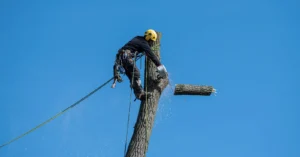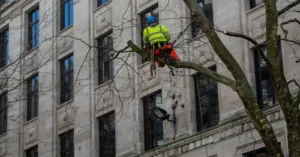
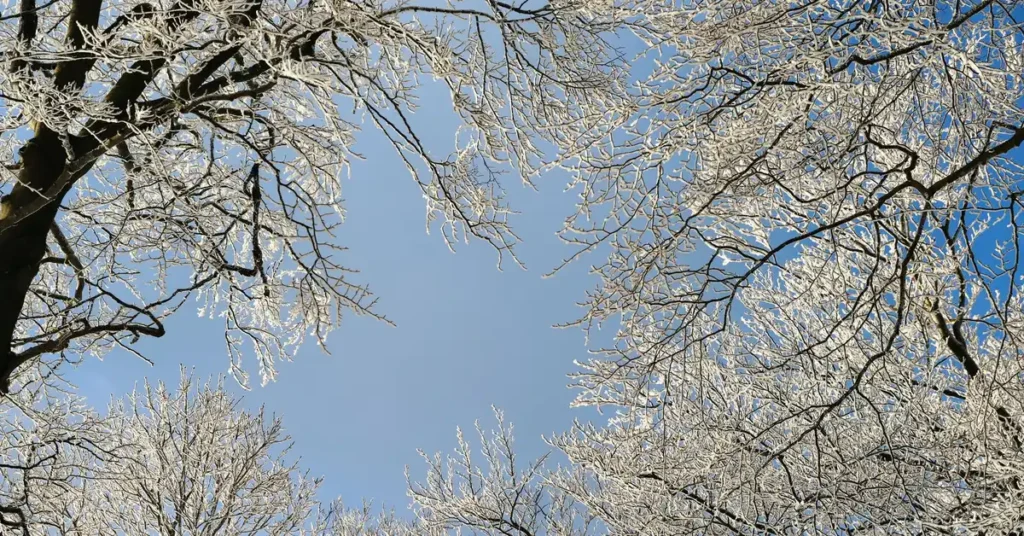
For most deciduous trees in Dublin gardens, November through to February is the best window to prune because the tree is dormant, the branch structure is easy to see without leaves in the way, and the cuts have the whole growing season ahead to heal before summer. It’s not the right time for every species though, and getting that wrong is one of the most common mistakes we see homeowners make when they try to time the job themselves.
Why Dormancy Makes the Biggest Difference
Once a deciduous tree has dropped its leaves, it stops actively moving sap and growing for the winter. Cutting into a tree at this point causes less stress than cutting during active growth in spring or summer, when the tree is pulling up water and nutrients hard and a fresh wound is more likely to bleed sap or attract pests and disease. On a dormant tree, the wound sits quietly over winter and starts to seal naturally as growth picks up again from March onwards.
There’s a practical side to this too. With no leaves on the tree, we can actually see what we’re doing. Crossing branches, dead wood, weak forks and the overall shape of the crown are far clearer in January than they are in July when everything is hidden behind foliage. On a lot of the older beech, oak and lime trees we work on around Rathfarnham, Dundrum and Blackrock, that visibility is the difference between a tidy, well-balanced reduction and a job that looks lopsided once the leaves come back.
Which Dublin Garden Trees Benefit Most
Oak, beech, ash, lime, sycamore and most fruit trees respond well to winter pruning. These are the trees we are routinely asked to carry out crown reduction or general tree pruning work on across Dublin city and the suburbs, and winter is when we schedule the bulk of that work. It’s also the sensible time to deal with storm damage, overhanging limbs near roofs and gutters, and any pollarding that’s part of an ongoing management plan for a large tree that’s outgrown a small garden.
The Trees Where Winter Pruning Is the Wrong Call
This is the part people researching the job online often miss. A handful of species do not want to be cut in winter at all.
Birch and maple are what we call “bleeders”. Prune them while dormant but close to the point when sap starts rising, typically late winter into early spring, and you’ll get a tree weeping sap from every cut for weeks. It doesn’t usually kill the tree, but it looks alarming and it’s avoidable. We prune these earlier in the dormant period or push the job to midsummer instead.
Cherry, plum and other members of the Prunus family are the opposite problem. These are at real risk from silver leaf disease and canker if cut while dormant, so the safer window for them is actually summer, not winter. If you’ve got an ornamental cherry in a front garden in Clontarf or Drumcondra, winter is exactly when we’d leave it alone.
Evergreens and most conifers don’t follow the deciduous pattern at all. Leylandii, cypress and similar hedging are better tackled in spring or late summer, which is a different job again from tree pruning. If that’s what you’re dealing with, our tree services page covers hedge work separately.
What Pushes the Price Up or Down
We never quote a job without seeing it, because the same species at two different Dublin addresses can cost very different amounts to prune properly. These are the main factors:
- Size and access. A mature tree in a tight back garden in Rathmines or Terenure, with no vehicle access and overhead wires nearby, takes longer and needs more careful rigging than the same tree in an open site.
- Condition of the crown. A tree that’s been left unpruned for ten or fifteen years usually has more dead wood, weak unions and crossing growth to remove, which adds time.
- How much reduction is needed. Light shaping is quicker than a full crown reduction or a hard pollard on a tree that’s outgrown its spot.
- Waste removal. Chipping and hauling away arisings adds to the job, particularly on larger trees where the volume of cut material is significant.
- Whether a Tree Preservation Order applies. If the tree is protected, there’s extra time involved in handling the local authority application before any cutting starts.
Rather than guess at a figure that won’t hold up once we see your tree, we’d rather walk the site and give you an honest, specific quote through our contact page.
Check Before You Cut: TPOs and Planning Permission
Plenty of mature trees in older parts of Dublin, and some newer estates too, are covered by a Tree Preservation Order, and trees in a designated conservation area can have extra restrictions even without one. Cutting a protected tree without permission can land a homeowner in genuine trouble. Before any significant pruning job, we always recommend checking with your local authority’s planning department to confirm whether a TPO or conservation area restriction applies to your property. It only takes a phone call to them, and it’s worth doing before any work is booked in.
What We Actually Check Before We Start Cutting
On site, before a chainsaw or pole saw goes anywhere near the tree, we’re looking at the overall structure, checking for signs of decay or included bark at the unions, confirming there’s nothing nesting (bird nesting season rules out most pruning work from spring into mid-summer on many species), and working out the safest way to access the crown without damaging the lawn, a shed roof, or the neighbour’s fence. Good access planning on a Glasnevin or Swords terrace with a narrow side passage often takes longer to sort than the pruning itself.
Get It Booked for This Winter
We’ve been pruning trees across Dublin for over 28 years, and winter is genuinely our busiest and, in our view, most productive season for this type of work. If you’ve got a tree that needs shaping, reducing or tidying up before spring growth starts, get in touch with Dublin Tree Surgeon through our contact page and we’ll give you a straight answer on timing, approach and cost for your specific tree.
Frequently Asked Questions
Is November to February really the best time to prune every tree in Dublin?
No. It’s the best time for most deciduous trees like oak, beech, ash and sycamore because they’re dormant and wounds heal well before spring growth. Bleeders like birch and maple, stone fruit trees like cherry and plum, and evergreens all follow different timing, so it’s worth checking the species before booking a date.
Can I prune my own trees in winter instead of hiring someone?
Light trimming of small branches you can reach safely from the ground is fine for most homeowners. Anything involving a ladder, a chainsaw, a tree over a few metres tall, or branches near power lines or a roof should go to a qualified, insured tree surgeon. Falls and chainsaw injuries are the two most common ways DIY pruning goes wrong.
Will pruning in winter damage my tree if there’s a hard frost?
A light frost on the day isn’t usually a problem, but we avoid cutting during a severe hard freeze when the wood is brittle and more likely to split rather than cut cleanly. We keep an eye on the forecast and reschedule rather than force a job through in bad conditions.
Do I need planning permission to prune a tree in my own garden in Dublin?
Routine pruning of an unprotected tree on your own property generally doesn’t need planning permission, but if the tree has a Tree Preservation Order or sits in a conservation area, different rules can apply. Confirm the current position with your local authority’s planning department before work starts.
How often should a mature tree in a Dublin garden be pruned?
It depends on the species and how it’s being managed, but many mature garden trees do well with a check every three to five years, with lighter maintenance in between if growth is fast or there’s storm damage to clear. A tree that’s being actively pollarded or kept to a restricted size needs a tighter, more regular cycle.
What happens if I miss the winter window this year?
It’s not the end of the world. Some light shaping and dead wood removal can be done at other times of year, but for a full crown reduction or heavier structural work on a deciduous tree, it’s generally better to wait for the next dormant season rather than cut hard while the tree is in full leaf.