There’s no single answer to “what does tree surgery cost in Dublin”, and anyone who gives you a flat figure without seeing the tree is guessing. The honest truth is that two trees of the same species and similar size can cost very different amounts to work on, depending on access, how close they are to a house or power line, and what condition the tree is actually in. What we can do is walk you through exactly what pushes a quote up or down, so you know what to expect and what questions to ask.
Why Dublin jobs vary so much in price
After 28 years working on trees across Dublin, from tight Victorian gardens in Rathmines and Drumcondra to bigger suburban plots in Stillorgan and Dundrum, the same pattern holds: access and risk decide the price far more than the size of the tree itself. A large, straightforward sycamore standing in an open back garden with a side gate wide enough for equipment is often cheaper to remove than a smaller tree wedged between a conservatory, a boundary wall and overhead cables. We’ve quoted jobs in Dun Laoghaire where the tree itself was modest but the only way to get the timber out was over a wall and through a neighbour’s side return, which adds hours to the job.
The other big variable is condition. A healthy tree that just needs a crown reduction or a tidy-up is a predictable job. A dead or diseased tree, especially one that’s been quietly dying for a few seasons, often has deadwood, hidden decay or weak unions that change how carefully (and how slowly) we have to work. That’s where a phone estimate based on a photo falls apart. We’ve turned up to “simple” jobs that needed roped sectional dismantling once we were actually up in the crown.
Pruning and crown reduction: what affects the price
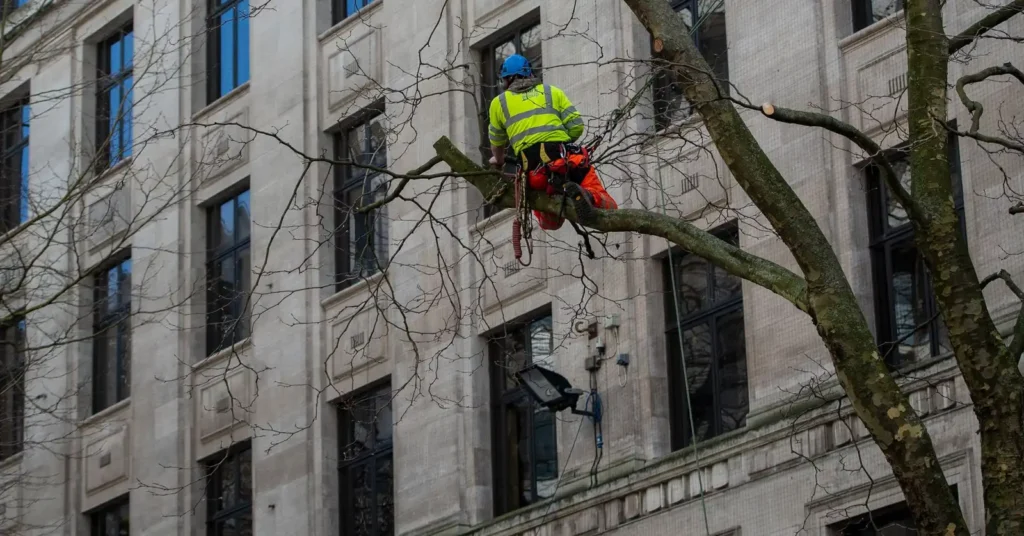
Routine tree pruning and crown reduction work is priced on time, access and the amount of material to remove, not a flat per-tree rate. A light crown thin on a semi-mature birch is a few hours’ work for one climber. A full crown reduction on a mature oak that’s outgrown a small garden, where branches need to be lowered on ropes rather than dropped, is an entirely different job in terms of labour and risk.
In our experience, the jobs that end up more expensive than homeowners expect are usually the ones where the tree has been left too long between prunes. A tree pruned every three to four years stays manageable. One left for ten or fifteen years often needs a heavier, more careful reduction simply to bring it back into proportion safely, and that takes longer. If you’re planning to prune regularly, it’s genuinely worth doing it on a cycle rather than waiting until a neighbour complains or a branch starts touching the roof.
Tree removal and felling: the real cost drivers
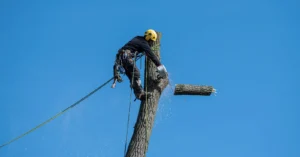
With tree removal and tree felling, the headline factor is whether the tree can be felled whole or has to be dismantled piece by piece. An open site with a clear felling direction, common enough on larger plots around Swords or Rathfarnham, lets us drop the tree in sections or even as a whole stem, which is quick. A tree hemmed in by a house, a shed, a greenhouse or a neighbour’s garden has to come down branch by branch, lowered on ropes, which is slower and needs more crew.
Height and species matter too. Tall conifers and mature beech or lime trees take longer to climb and dismantle safely than a smaller ornamental tree. And if the tree overhangs a road, a path, or ESB lines, we sometimes need extra planning, traffic control, or coordination with the ESB, all of which adds time before a saw is even started.
One thing worth flagging honestly: in parts of Dublin covered by a tree preservation order, or where the tree is in a designated conservation area, you may need permission from your local authority before any significant work, including removal. This varies by property and area, so always check directly with Dublin City Council or your local county council planning section before work begins. A reputable tree surgeon should raise this with you anyway, not leave you to find out after the fact.
Stump grinding: often cheaper than people assume
Stump grinding is usually priced by stump diameter and how deep the roots need to be ground, which depends on what’s going on top of the ground afterwards. If you’re reseeding lawn, a shallower grind is fine. If you’re planning to lay a patio, path or driveway over the spot, the stump and major roots need to be ground deeper and wider, which takes longer. Access matters here too. A grinder is a heavy machine, and if it has to be carried through a house or over a narrow side passage rather than driven straight to the stump, that adds labour.
Multiple stumps on one site are almost always better value done together in a single visit than booked separately, simply because the machine is already on site and set up.
What actually pushes your quote up or down
- Access: wide side gate and clear path to the tree keeps costs down; tight gardens, steps or shared access push them up.
- Height and size: taller, heavier trees need more rigging, more time, and sometimes a second climber.
- Proximity to structures and wires: branches near a roof, conservatory or overhead line mean slower, more careful dismantling.
- Condition: deadwood, decay, or storm damage increases risk and often changes the method used.
- Waste removal: taking all timber and chippings away costs more than leaving logs for firewood or chippings for mulch.
- Permissions: if your tree is subject to a preservation order, factoring in the local authority process can affect timing (confirm this directly with your local authority).
How to get an accurate quote, not a guess
The quotes that hold up are the ones based on an actual site visit, not a photo sent over WhatsApp. We’ll always want to see the tree, check access from the road or driveway to the tree itself, look at what’s underneath and around it, and get a proper look at the crown before giving a figure. For anything involving height, proximity to a house, or a tree that looks stressed or storm-damaged, that site visit also lets us flag anything that needs a closer look, like decay at the base or included bark in a major fork, before it becomes a problem on the day of the work.
If you want a straight answer for your specific tree, the quickest route is to get in touch through our contact page with a few photos and your address, and we’ll arrange a visit. We cover tree surgery right across Dublin, from Clontarf and Glasnevin to Terenure and Dundrum, and after 28 years of doing this work we’d rather give you an honest figure for your actual tree than a number that sounds good on the phone and changes once we arrive.
Frequently Asked Questions
Is tree removal always more expensive than pruning?
Not always. A straightforward removal of a small tree with good access can cost less than a complex crown reduction on a large, awkwardly placed mature tree. It really comes down to time on site and the method needed, not just whether the tree comes down fully or is cut back.
Do I need planning permission to remove a tree in Dublin?
It depends on the tree and the property. Some trees are covered by a tree preservation order or sit within a conservation area, which can mean permission is needed before work goes ahead. Rules and designations vary by area, so always check directly with your local authority (Dublin City Council or the relevant county council) before any removal work, especially for large or older trees.
Will removing a tree stump stop regrowth?
Grinding the stump and the main surface roots greatly reduces the chance of regrowth from that point, though some species can send up suckers from remaining roots further out. If regrowth is a concern for your particular tree, mention it when you book so we can grind to an appropriate depth and width for your plans.
What’s the best time of year for pruning in Dublin?
Most pruning can be done through autumn and winter while trees are dormant, which is also when we see the structure of the crown most clearly. Some species and some jobs are better suited to other times of year, so if timing matters for your tree, it’s worth asking us directly rather than assuming one rule fits every species.
Can I get chippings or logs left on site to reduce the cost?
Often yes. Leaving logs for firewood or chippings for mulch on your own garden means less material to haul away, which can bring the job in cheaper than a full clean and removal. Just mention it when you’re arranging your quote so it’s priced in correctly from the start.
How do I know if a tree surgeon in Dublin is properly set up to do this work?
Ask about insurance, ask how long they’ve worked in the trade, and ask whether they’ll do a site visit before quoting rather than pricing from a photo. Dublin Tree Surgeon has over 28 years of tree surgery and hedge care experience across Dublin and is qualified, insured and fully guaranteed, which is the standard we’d suggest checking for with anyone you’re considering.