On the day itself, a tree job usually runs in four stages: the crew arrives and walks the site again with you, they rig up and start cutting or climbing, the wood and brash get processed and removed, and the area gets swept and checked before anyone leaves. A straightforward crown reduction on a semi-detached garden in Terenure might take half a day. A large beech removal near overhead lines in Stillorgan could run into two. The quote you were given should already have told you roughly which one you’re getting.
What should already be settled before the crew turns up
If the quote was done properly, there should be no surprises on the day. We walk the site at quoting stage, not just look at the tree. That means checking access down the side passage, whether a crane or just ropes and a chipper will fit, where the wood is going to land, and whether there’s a Tree Preservation Order or the property is in a conservation area, which is common enough in parts of Dun Laoghaire, Blackrock and the older streets around Drumcondra. If a TPO applies, or the tree is in a conservation area, you need to confirm the position with your local authority before any work starts. A reputable contractor will flag this for you, not leave you to find out after the fact.
You should also know, before the day, roughly how the waste is being dealt with, whether the stump is being ground or left, and who is responsible for moving cars or bins out of the way. Small things, but they’re the ones that cause friction on the morning itself.
The crew arriving: the bit homeowners don’t expect
The first twenty minutes on site rarely involves a chainsaw. We do a site safety check, a dynamic risk assessment really, looking at the tree again in daylight, checking for dead wood overhead, cracks, hanging limbs, wasp activity, the state of the ground after rain. Dublin gardens are often smaller and more enclosed than people picture, so a lot of the early time goes into setting up ropes, protecting a patio or a greenhouse, and agreeing with you exactly which branches are coming off and which are staying. If you want to be there for that conversation, say so. It’s the best moment to change your mind on a detail, not once the saw is running.
Where a tree sits close to a boundary wall, a shed roof, or a neighbour’s garden, which is the norm on most of our jobs from Rathmines to Clontarf, we’ll usually have a second person on ground ropes controlling where each piece lands. That’s not overkill, it’s standard practice on anything above a certain size.
The actual cutting: climbing, rigging or machinery
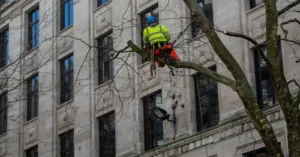
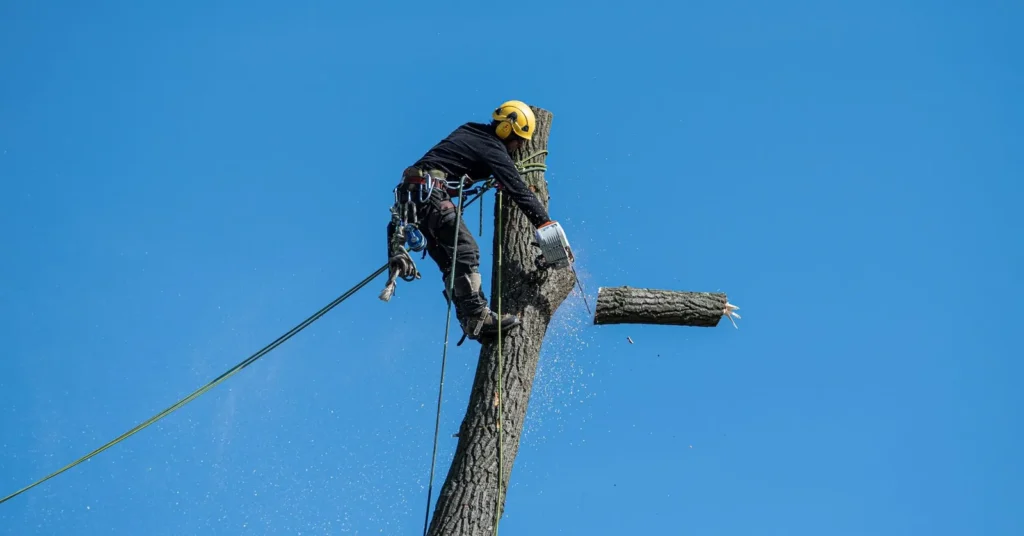
How the tree comes down depends entirely on size, species and access. A lot of our work is crown reduction or thinning on mature trees that are getting too big for a garden, rather than full removal. That’s climbed work, done in sections, lowered on ropes so nothing drops free near a house or a patio. Full tree removal on a tight urban plot often means dismantling the tree piece by piece from the top down, rather than felling it in one go, simply because there isn’t room to do it any other way. Open-ground felling, where the whole tree goes over in one controlled cut, is really only an option on larger sites with clear space to drop it, which is less common inside the M50 than it is further out.
If the job is pruning or formative work rather than removal, expect it to look more drastic immediately after than it will in six months. Correct pruning often looks harder than it is, trees recover and fill back in over a growing season or two.
Parking, access and the neighbours
This is the part that catches people out most in Dublin. Narrow terraced streets in Rathmines or Drumcondra, permit parking zones, bin collection day falling on the same morning, a shared driveway in a Dundrum estate. Sort access the day before, not the morning of. If a chipper or a truck needs a specific spot outside your house, or outside a neighbour’s, it’s worth a quick word with them in advance. Most neighbours are fine with a bit of noise for a few hours once they’ve had the heads up rather than a surprise.
If any part of the work affects a shared boundary hedge or a tree that technically sits on or near the line, have that conversation with the neighbour before the quote stage if you can. It avoids an awkward chat happening over a running chainsaw.
Clean-up: what “finished” actually means
A proper finish means the lawn is raked, the brash and offcuts are chipped or removed, and any usable timber is stacked where you’ve asked for it if you want to keep it for firewood. Sawdust gets swept off paths and patios, not just the lawn. Stump grinding, if it’s part of the job, is usually done last since it’s the messiest part and throws up a fine wood chip and soil mix that needs clearing separately. Ask at quote stage whether waste removal is included or charged separately, because this is one of the most common points of confusion after the fact, not during.
What pushes the cost of a tree job up or down
- Access: a tree reachable from the street costs less to remove than one behind a narrow side passage needing everything carried out by hand.
- Height and species: a mature beech or sycamore takes longer to dismantle safely than a smaller ornamental tree.
- Proximity to structures: work near a conservatory, overhead wires or a boundary wall needs slower, more controlled rigging.
- Waste disposal: whether chippings and timber are removed from site or left with you changes the time on the job.
- Stump grinding: leaving a stump in place is quicker and cheaper than grinding it out, but it may regrow or attract honey fungus over time.
- Permissions: if a Tree Preservation Order or conservation area applies, confirming the position with the local authority can add time before work can start at all.
Because of all this, we’d always rather see a tree in person or get a clear set of photos and a sense of access before quoting a figure. Anyone who gives you a firm price over the phone without seeing the site is usually guessing.
Getting the right crew for the job
We’ve been doing tree surgery and hedge care across Dublin for over 28 years, working gardens from Swords down to Dun Laoghaire and everything in between, so we’ve a fair sense of what each type of job actually involves on the day, not just on paper. If you’re planning work and want a realistic idea of timing, access needs and what’s included, have a look at our tree services page or get in touch through our contact page and we’ll talk you through what the day would actually look like for your tree.
Frequently Asked Questions
How long does a typical tree job take in a Dublin garden?
A single tree pruning or crown reduction on an average suburban garden often takes half a day. Full removal of a large mature tree, especially with awkward access or overhead lines nearby, can run to a full day or longer. Hedge work is usually quicker but depends heavily on the length and height involved.
Do I need to be home while the work is being done?
Not necessarily, but it helps if you’re reachable, especially at the start when the crew is confirming exactly which branches or trees are being worked on. If access runs through your house or garden, someone needs to be there to let the crew in and out.
Will the crew take away all the branches and wood chip?
This depends on what’s agreed at quote stage. Most jobs include removal of brash and chippings, but check whether you want to keep any timber for firewood, as that changes how the wood gets stacked or cut up on site.
What happens if it’s raining or windy on the planned day?
Light rain usually isn’t a problem, but strong wind can stop climbing work or any job near overhead lines or buildings, since it affects control of falling branches. A genuine tree surgeon will reschedule rather than push ahead in unsafe conditions, and that’s worth being wary of if a contractor says wind won’t matter.
Do I need planning permission or a tree survey before the work starts?
Most routine pruning and small tree work doesn’t need permission, but if the tree is subject to a Tree Preservation Order or sits in a conservation area, which is more common in parts of Dun Laoghaire and the older Dublin suburbs, you’ll need to confirm the current position with your local authority before any cutting takes place.
How is the price for a tree job actually worked out?
It comes down to access, the size and condition of the tree, how the wood and waste are being removed, and whether stump grinding or extra permissions are involved. We’d always want to see the site or clear photos before giving a firm figure, which is why we recommend getting a proper quote rather than relying on a rough guess over the phone.