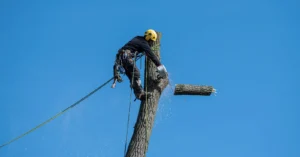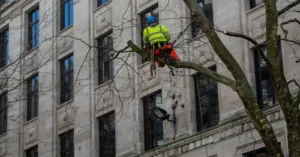
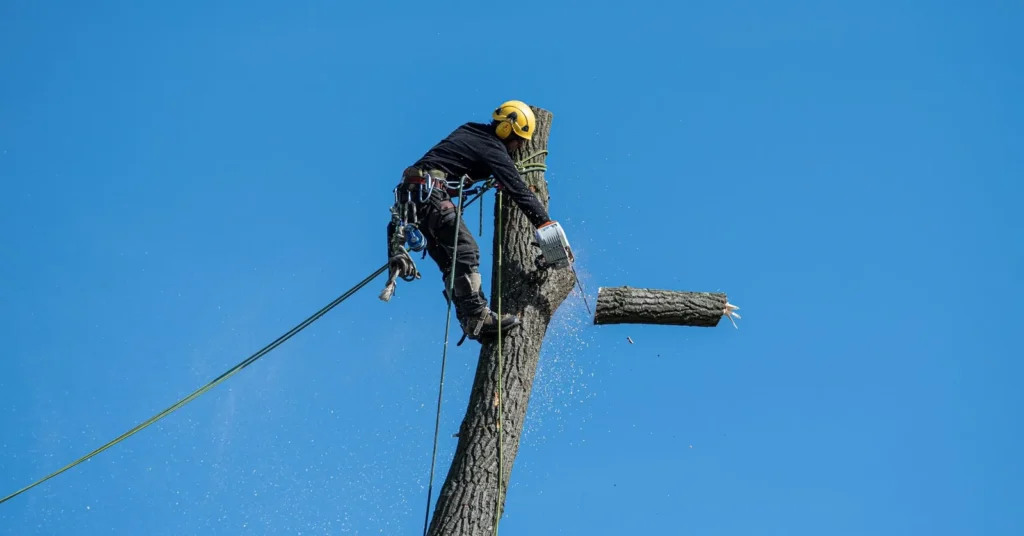
The quickest way to get your Dublin garden storm ready is to walk around every tree on the property before December and look for the things that actually fail: dead wood in the crown, cracked branch unions, a trunk that leans more than it used to, and roots lifting the ground at the base. If any of that shows up on a tree near the house, a shed, a car, or a boundary fence, get it checked by someone qualified before the first named storm arrives, not after the first branch comes down.
Why Dublin gardens need this done properly, not just a quick look from the kitchen window
We get a wave of calls every November and December, and almost always it’s the same pattern. A tree that’s been fine for twenty years suddenly becomes a worry the week Met Éireann issues an orange warning. The truth is the tree usually didn’t change overnight. The weak point was there all along, just not obvious from the patio.
Dublin’s mix of soils makes this worse than people expect. Heavy clay around areas like Rathfarnham, Dundrum and parts of Terenure holds water after a wet autumn, which softens the ground around root plates and makes a storm-stressed tree far more likely to go over roots and all, rather than just losing a limb. Out along the coast in Clontarf and Dun Laoghaire, salt-laden wind and shallower, sandier soil do different damage, more dieback at the crown and more one-sided leaning on trees that have grown away from the prevailing wind for years. Older gardens in Rathmines, Drumcondra and Glasnevin often have mature trees planted far too close to the house by a previous owner decades ago, and ivy has crept up the trunk hiding cracks and cavities that would otherwise be obvious.
The pre-storm checklist: what to actually look for
You don’t need to be a tree surgeon to do a first pass yourself. This is the same list our crews run through on a site visit, just without the climbing gear.
- Dead or broken branches in the crown, especially anything hanging or only partly broken off, sometimes called a hanger.
- Cracks or splits where a branch meets the trunk, particularly on trees with a narrow V-shaped union rather than a wide U-shape.
- A new or worsening lean, or a trunk that moves at the base when pushed gently.
- Lifted or cracked soil and lawn around the base, which can mean the root plate has already started to move.
- Fungal growth at the base or on the trunk, bracket fungus in particular, which often points to internal decay.
- Heavy ivy cover that’s hiding the trunk and making it impossible to see defects underneath.
- Overly dense, top-heavy crowns on trees that have never been thinned or reduced, since a solid canopy catches far more wind than one that lets some through.
- Branches overhanging the roof, boundary wall, car, or a neighbour’s garden, which is where storm damage causes the most expensive problems.
If you find even one of these, it doesn’t automatically mean the tree needs to come down. Most of the time it means a targeted crown reduction or some careful pruning will sort it. It’s the trees nobody looks at that cause the problems.
What we actually find most often on pre-storm inspections
Honestly, the single biggest issue we see across Dublin isn’t rot or disease, it’s neglect of ordinary maintenance. A tree that’s been left completely unpruned for fifteen or twenty years develops a dense, heavy crown that acts like a sail in high wind. Thin that crown out properly every few years and the same tree can ride out a storm that would otherwise snap a limb straight off.
The second most common thing is trees planted too close to a house or boundary back when the garden was first laid out, often in the 1960s to 1980s estates around Swords and the wider suburbs, that have simply outgrown the space. Nobody budgeted for how big they’d eventually get. By the time we’re called, the roots have started lifting a patio or the canopy is resting on the gutter, and storm season just brings the problem to a head faster.
We also see a lot of ivy-smothered trees where the owner genuinely has no idea what condition the trunk is in because they haven’t seen it in years. That’s a quick thing to sort and well worth doing before winter, even if nothing else needs work.
DIY checks versus calling in a professional
A visual walk-around is something any homeowner can and should do. Climbing a ladder to inspect a crown up close, or making a call on whether a lean is structural, is not. If a tree is over about four or five metres, overhangs a building, or you’re not sure whether what you’re looking at is serious, get a second opinion from someone who does this for a living. It costs far less to deal with a problem branch in November than to deal with storm damage to a roof, car, or fence in January.
For trees that clearly need work, the usual options are a reduction or thinning to ease wind load, removal of dead or hanging wood, or in more serious cases full tree removal where the structure is too compromised to save safely. Pollarding is sometimes used on certain species to keep size permanently under control, though it’s not the right answer for every tree and we’d always talk through whether it actually suits the species and the garden before recommending it.
What affects the cost of pre-storm tree work
We don’t quote prices without seeing the job, because the same-looking tree can cost very different amounts depending on the details. What actually moves the cost is:
- Height and size of the tree, and how much crown needs to be worked on.
- Access, whether we can get a vehicle close or everything has to be carried through a narrow side passage, common in older Dublin terraces.
- Proximity to buildings, power lines, or a neighbour’s property, which affects how the work has to be rigged and lowered.
- How many trees need attention on the one visit, since a site visit cost is spread across the job either way.
- Whether the tree is protected by a Tree Preservation Order or sits within a conservation area, which your local authority can confirm and which may affect what work is permitted.
- Timing, booking ahead of storm season is almost always more straightforward than emergency call-outs once warnings are already issued.
The only honest way to get a real figure is a site visit, which is what we’d recommend doing now rather than waiting for the first red warning of the season.
Get it checked before the next named storm, not after
We’ve been doing tree surgery and hedge care across Dublin for over 28 years, from Stillorgan and Blackrock out to Swords and everywhere in between, and the pattern never really changes: the gardens that come through winter storms without drama are the ones where someone looked at the trees in October or November, not the ones where someone waited to see what happened. If you want a straightforward, no-pressure assessment of what’s in your garden, have a look at our tree services and get in touch through our contact page to arrange a visit before the weather turns.
Frequently Asked Questions
How do I know if a tree is actually dangerous before a storm?
Look for a lean that’s new or worsening, cracked or lifted ground around the base, large dead branches in the crown, or fungal growth on the trunk or roots. Any one of these on a tree close to a house, car or boundary is worth getting checked properly rather than guessing.
Does home insurance cover storm damage caused by a tree?
Most home insurance policies do cover storm damage, but cover and any exclusions around tree maintenance or neglect vary by provider and policy. Check the specific wording of your own policy, and keep in mind that insurers can sometimes query whether a tree was reasonably maintained beforehand.
Do I need planning permission to prune or remove a tree before winter?
It depends on the tree, whether it’s covered by a Tree Preservation Order, and whether the property is in a designated conservation area. Rules and thresholds can change, so confirm the current position with your local authority before carrying out significant work, particularly removal.
What should I do if a tree comes down or is damaged during a storm?
Keep people and vehicles well clear, especially if it’s near power lines, and don’t attempt to cut or move large storm-damaged timber yourself since it’s often under tension and can move unpredictably. Contact a tree surgeon for an emergency assessment and removal once it’s safe to do so.
How often should trees in a Dublin garden be inspected?
A yearly visual check is sensible for most gardens, with a closer look before winter when storm risk is highest. Mature trees, trees near buildings, or anything that’s never been pruned should be looked at more carefully and more often.
Is it worth pruning a tree now if the storm season has already started?
Yes, there’s no real cut-off date. Reducing a heavy or unbalanced crown even partway through winter still lowers the wind load on that tree for whatever storms are left in the season, so it’s rarely too late to act.