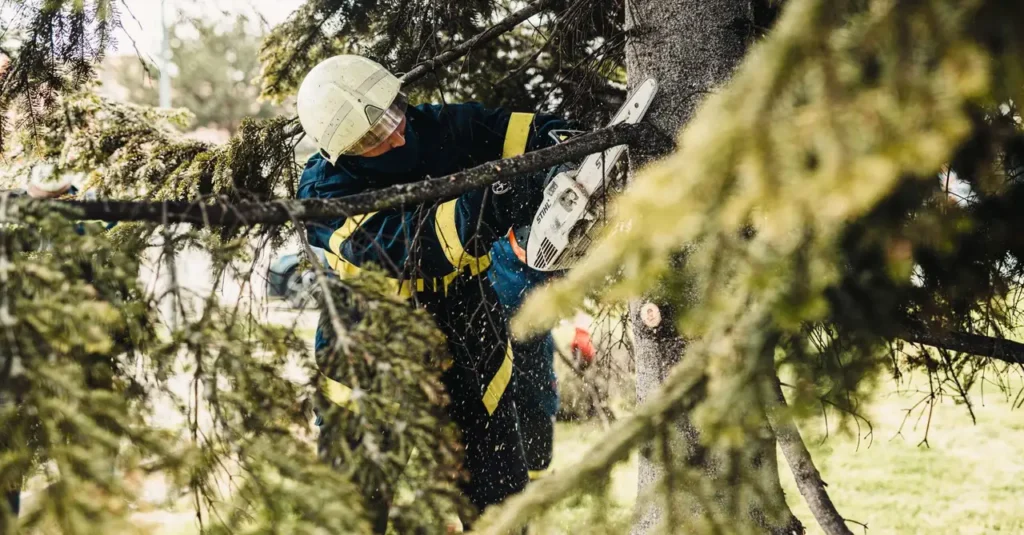
The short answer: ask to see current public liability insurance, ask what arboricultural training or certification the climber actually holds, and get a written quote before anyone touches a saw. If a company dodges any one of those three questions, walk away. Most of the serious problems we get called out to fix in Dublin gardens started with someone skipping that step.
Why this matters more than people think
Tree work looks simple from the ground. A chainsaw, a ladder, a few hours, job done. In reality it’s one of the few trades where a bad call can put someone through a greenhouse roof, bring down a power line, or drop a limb on a parked car three doors away. We’ve been doing this across Dublin for over 28 years, and the jobs that go wrong almost always trace back to someone who was cheap to hire and had no proper cover behind them.
The cost difference between a properly insured, trained tree surgeon and a lad with a van and a chainsaw is usually not as big as people assume once you compare like for like. But the risk difference, if it goes wrong, is enormous.
Insurance: the one thing you must not skip
Any contractor working at height with a chainsaw near a house, a boundary wall, or a neighbour’s property should hold public liability insurance, and ideally employer’s liability cover if they bring a team. Ask for the current certificate, not a verbal assurance, and check the expiry date. If you’re paying a deposit or the full amount upfront with no paperwork and no certificate offered, that’s your answer.
Here’s the bit people don’t think about: if an uninsured operator damages your roof, your neighbour’s car, or a boundary fence, you as the homeowner can end up carrying that cost or fighting it through your own home insurance. We carry our own cover as a matter of course and are happy to show it on request, which is exactly what you should expect from anyone quoting you.
Qualification and experience: what actually matters
There’s no single licence that makes someone “a qualified tree surgeon” in Ireland the way there is for, say, an electrician. What you’re really checking for is relevant arboricultural training (chainsaw and climbing certificates, often through recognised bodies like NPTC or similar), and genuine hands-on experience with the specific job you need done. A crown reduction on a mature beech beside a party wall is a different skill set to felling a small sick conifer in an open garden.
Ask how long they’ve been doing tree surgery specifically, not landscaping generally, and ask whether the person actually climbing the tree holds the training, not just the person who answers the phone. After 25-plus years on Dublin trees, we’ve seen plenty of “landscapers” take on tree work they weren’t set up for, usually because the client didn’t ask.
Red flags we see across Dublin, in order of how often they come up
Some of this repeats after every storm season. The pattern is consistent enough that it’s worth naming directly.
- Door to door callers after a storm, often working their way through Stillorgan, Dundrum or Swords straight after high winds, offering to “sort your dangerous tree” that afternoon.
- Cash only, no written quote, and pressure to decide on the spot.
- No insurance certificate offered, or a vague answer when you ask.
- Recommending “topping” (hacking the whole crown flat) as a cheap fix. This is bad practice on most species, weakens the tree long-term, and a competent tree surgeon will steer you towards proper crown reduction instead.
- No mention of planning or tree preservation checks on an obviously large or old tree, especially in conservation areas around Dun Laoghaire, Blackrock or Rathfarnham.
- An unmarked van and no fixed business address you could find again if there’s a problem.
What to ask for before you say yes
A genuine professional will have no issue giving you these without hesitation:
- Current public liability insurance certificate
- A written quote describing the actual work (not just “tree work, back garden”)
- Confirmation of who is doing the climbing and what training they hold
- Clarity on whether the price includes waste removal and clean-up
- Their view on whether the tree even needs the work you’re asking for
That last one matters. We’d rather tell a homeowner in Clontarf or Glasnevin that their tree is healthy and doesn’t need touching than talk them into unnecessary work. A good contractor will sometimes talk you out of a job, not just into one.
Planning permission and protected trees in Dublin
Many mature trees across Dublin city and the surrounding suburbs sit within conservation areas or are covered by a Tree Preservation Order, particularly in the older red-brick suburbs like Rathmines, Terenure and Drumcondra, and along parts of Dun Laoghaire. Whether permission is needed depends on the specific tree, its size, and the local authority area it falls in. Rules and thresholds can change, so always confirm the current position with your local authority’s planning section before work starts, rather than relying on what a neighbour did or what you read somewhere online. A properly experienced tree surgeon will usually flag this for you during the site visit, but the legal responsibility sits with the homeowner, not the contractor.
Comparing quotes properly
Don’t compare quotes on the final number alone. Two quotes for “crown reduction” can describe completely different amounts of work. Ask each contractor exactly what they’re proposing to cut, whether they’re removing or chipping the arisings, and whether they’re including stump grinding if a tree is coming out entirely. What pushes a price up or down is usually access (a tight back garden with no side entry costs more than an open front garden), the size and species of the tree, whether a crane or specialist rigging is needed near a house or power line, and how much waste has to be hauled out manually versus chipped on site.
If you’d like an honest, written quote for your own tree, garden or hedge, the easiest route is through our tree services page, where we can arrange a site visit and give you a proper assessment rather than a guess over the phone.
Frequently Asked Questions
Do I need planning permission to cut down a tree in my Dublin garden?
Often not, but it depends on the tree and whether it’s covered by a Tree Preservation Order or sits in a conservation area, which is more common in older Dublin suburbs. Confirm directly with your local authority’s planning department before any work starts.
How do I check if a tree surgeon is actually insured?
Ask for the current public liability insurance certificate and check the expiry date. A genuine contractor will produce this without hesitation. If they hesitate or avoid the question, treat it as a warning sign.
Is it normal to pay a deposit before tree work starts?
A reasonable deposit for materials or scheduling isn’t unusual on larger jobs, but be wary of anyone demanding full payment upfront, cash only, with no written quote or paperwork.
What’s the difference between tree pruning and tree pollarding?
Pruning removes specific branches to improve shape, health or light, while pollarding involves cutting back to a framework of main branches on a fixed cycle, usually to control the size of a tree long-term. Not every species or situation suits pollarding, so it’s worth getting a proper assessment first.
Why do quotes for the same tree vary so much between companies?
Mostly access, equipment needed, and exactly what’s included (waste removal, stump grinding, clean-up). Always ask each contractor to describe the actual work, not just a one-line job title, so you’re comparing the same scope.
Can a tree surgeon tell me if a tree is actually dangerous or just overgrown?
Yes, and a good one will tell you honestly if the tree doesn’t need removal at all. Overgrown is very different from dangerous, and at Dublin Tree Surgeon we’d rather recommend a crown reduction than talk a homeowner into unnecessary tree removal.