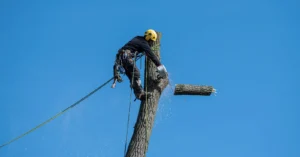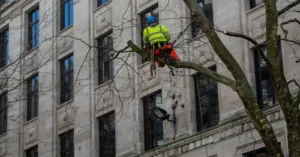

Leylandii and conifer hedge removal in Dublin usually costs more than homeowners expect once stump grinding, waste disposal and access problems are factored in, and the final figure depends far more on size, root spread and whether machinery can reach the hedge than on the length of fencing it runs along. There is no honest flat rate we can give you without seeing the job, but we can tell you exactly what moves the number up or down, and what the process actually involves from first cut to clear site.
Why leylandii hedges in Dublin cause more trouble than people think
We see the same pattern across estates in Stillorgan, Rathfarnham and Swords: a leylandii or Leyland cypress boundary hedge was planted in the 1980s or 90s as a quick, cheap privacy screen between two gardens. Thirty or forty years later it’s six or seven metres tall, the roots have run under a shed base or a patio, and both neighbours are sick of the shade, the needle drop, and the arguments over whose side should pay for it coming down.
The thing people underestimate is the sheer volume of material. A mature conifer hedge isn’t like a beech or laurel hedge you can shred in an afternoon. Leylandii grows dense and fast, so a run that looked manageable from the house can produce several trailer loads of green waste once it’s actually cut. That volume, not the labour of cutting it, is usually what surprises homeowners when they get a quote.
What actually happens on a leylandii removal job
A proper removal isn’t just “cut it down.” The sequence we follow on most Dublin gardens looks like this:
- Assess access first, including whether a chipper or grab lorry can get to the back garden, or whether material has to be carried out by hand through a side passage.
- Reduce height in sections from the top down, rather than felling the whole tree at once, especially where it’s close to a fence, shed, conservatory or overhead line.
- Chip or section the brash on site to reduce the number of trips needed to clear it away.
- Cut the stems down to ground level and assess the stumps for grinding.
- Grind or dig out stumps if the client wants to replant, lay a new fence, or put down a patio or lawn where the hedge stood.
- Clear and sweep the site, leaving it tidy for whatever goes in next.
On terraced houses in Drumcondra or Rathmines with no rear vehicle access, that middle stage of moving the waste is often the slowest part of the job, slower than the actual cutting. It’s worth mentioning this to whoever you ask for a quote, because access changes the price more than the hedge itself does.
What pushes the cost up or down
We can’t put a figure on your job without seeing it, but these are the real factors that move the price:
- Height and number of stems. A 2 metre hedge along a short boundary is a different job to a 7 metre run of mature trees.
- Access. Rear gardens with no side entry, or houses backing onto a laneway, usually mean waste has to be carried further or lifted over a wall.
- Stump removal. Leaving stumps in the ground is cheaper on the day but limits what you can do with the space afterwards. Grinding adds time and machinery but gets the ground usable.
- Waste disposal distance and volume. Green waste has to go somewhere, and a dense leylandii hedge produces a lot more of it than most people picture.
- Proximity to structures, power lines or a neighbour’s property. Anything that needs careful sectional dismantling rather than a straightforward fell takes longer.
- Whether one side or both sides want the work done. Shared boundary hedges sometimes split costs, but that’s between the neighbours, not something we arrange.
If you want an accurate number rather than a guess, the quickest route is to get someone out to look at the actual hedge. You can arrange that through our tree surgery services page.
Roots, stumps and what you’re left with
Leylandii roots spread wide and shallow rather than deep, which is both good and bad news. Good, because they rarely cause the structural damage to foundations that people worry about. Bad, because they knit together under patios, path edges and shed bases, and digging them out by hand is genuinely hard graft.
Stump grinding is the sensible option if you’re planning to replant, lay a new boundary fence, or reclaim the ground for a lawn or border. If you’re not in a hurry to do anything with that strip of garden, leaving the stumps to rot down naturally is a fair call, it just means the ground stays uneven and unusable for a year or two. We’d always ask what you’re planning for the space before recommending one or the other.
Planning permission and neighbour disputes
Removing a hedge on your own property generally doesn’t need planning permission, but there are exceptions worth checking before work starts, particularly if the hedge is within the curtilage of a protected structure, in a designated conservation area, or if there’s any possibility a Tree Preservation Order applies to individual trees within it. Tree Preservation Orders are not common on ordinary leylandii boundary hedges, but Dublin has areas where older or landmark trees are protected, so it’s worth a quick check with your local authority planning section if you’re in any doubt.
Boundary disputes are a different matter entirely, and not something we can resolve for you. If a hedge is genuinely shared or if there’s disagreement about who’s responsible for cutting it, that’s a conversation for you and your neighbour, and in cases that don’t get sorted informally, Citizens Information has guidance on the routes available. We simply do the tree work once it’s clear whose side of the boundary we’re working on.
Why DIY leylandii removal usually goes wrong
We understand the appeal of hiring a chainsaw for a weekend, but leylandii removal is one of the jobs that catches out more DIYers than almost any other hedge work. The stems lean under their own weight once cut partway through, the brash is far heavier and bulkier than it looks, and a mature run close to a boundary wall or fence can come down in a direction you didn’t plan for. We’ve been called out more than once to finish a job that started well and went wrong halfway through a garden. If the hedge is over head height, close to a structure, or there’s any question about where the waste is going to go, it’s worth getting someone qualified in to look at it first.
Get an honest quote for your hedge
We’ve been cutting, reducing and removing hedges across Dublin for over 28 years, from small back-garden boundary jobs in Terenure to large overgrown runs in Dundrum and Clontarf, so we’ve a fair idea of what a job like yours will actually involve before we even arrive. If you’d like someone to come and look at your leylandii or conifer hedge and give you a straight answer on what’s involved, get in touch through our contact page and we’ll arrange a time to call out.
Frequently Asked Questions
How tall can a leylandii hedge legally be in Dublin?
There’s no blanket legal height limit on a conifer hedge between two private gardens in Ireland. Disputes over overshadowing hedges are generally dealt with through direct agreement between neighbours or, where that fails, through the routes outlined by Citizens Information. If you’re unsure where you stand, it’s worth checking the current position before taking any action.
Can I remove a leylandii hedge myself to save money?
You can, but mature leylandii is heavier and more awkward than it looks, and the volume of waste it produces often surprises people. For hedges under head height with clear access it’s a reasonable DIY job. Anything taller, closer to structures, or without easy access to remove the waste is where we’d recommend bringing someone in.
Do I need planning permission to remove a conifer hedge?
Usually not, but check with your local authority if the hedge is near a protected structure, in a conservation area, or if there’s any chance an individual tree within it is covered by a Tree Preservation Order. It’s a quick call to make before work starts rather than something to assume.
Should I grind the stumps or leave them?
It depends on what you want to do with the ground afterwards. If you’re replanting, fencing, or laying a patio or lawn, grinding the stumps makes the most sense. If the space isn’t being used for anything straight away, leaving them to break down naturally is a cheaper, if slower, option.
How long does a leylandii hedge removal job take?
A short, accessible run can sometimes be cleared in a day. A long, mature hedge with poor access or stump grinding included can take several days. Access to the garden, not the height of the hedge, is usually the biggest factor in how long a job runs.
What happens to the cut material?
Most of it gets chipped on site to reduce the number of loads needed, then removed by trailer or lorry. On jobs with very poor access, material sometimes has to be carried out by hand, which is worth factoring into your timeline and your quote.