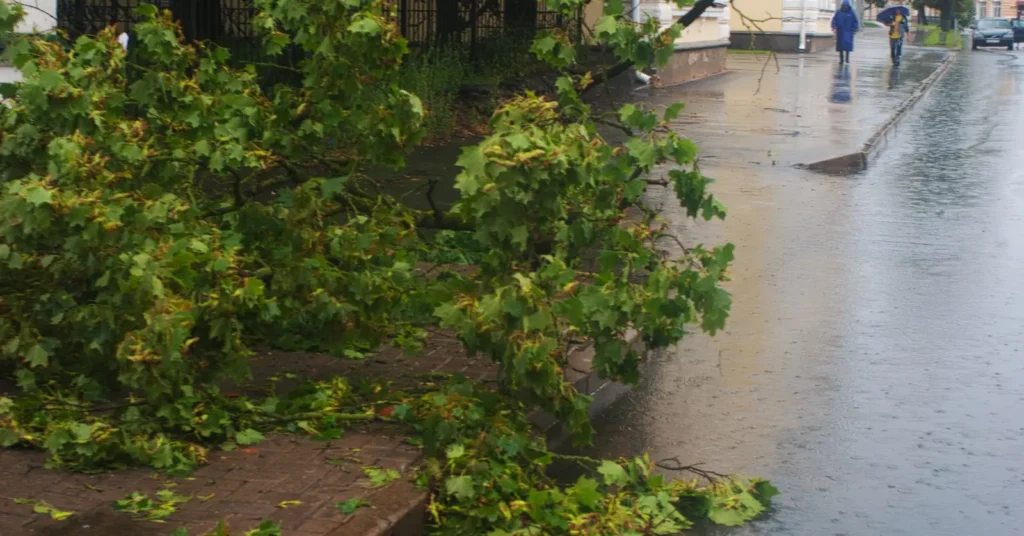
If a tree or branch is down on a road, a car, a roof or power line, or there’s a large hanging branch ready to drop, that’s an emergency and you call someone straight away. If a tree has shifted at the base, or you can see fresh soil lifting around the roots after a storm, that’s also urgent even if nothing has actually fallen yet. Most other storm damage, a split limb still in the canopy, some torn bark, a few snapped branches in the lawn, can usually wait a day or two for a proper assessment rather than a panicked call at midnight.
What we actually see after a Dublin storm
We’ve been doing this work across Dublin for over 28 years, and the pattern after every named storm is fairly consistent. The calls spike the morning after, not during the storm itself, because that’s when people get out into the garden and see what’s happened. The trees that fail are rarely the ones homeowners worry about. It’s usually not the big, obviously old tree everyone’s had an eye on for years. It’s more often a leylandii hedge gone top-heavy, a sycamore or ash with a weak union nobody noticed, or a tree that’s had its roots quietly compromised by a driveway extension or drainage work a few years back. Dublin’s clay soils hold water badly after heavy rain, and a tree that’s stood fine for decades can suddenly go over once the ground around the roots turns to soup and a gust catches a full, leafy crown. Evergreens like leylandii and conifers are especially prone to this because they hold their canopy right through winter, so there’s more sail area for the wind to work with than on a bare deciduous tree.
The other thing we see constantly: people underestimate hung-up branches. A branch that’s snapped but caught in the branches below, sometimes called a “widowmaker” in the trade, looks harmless because it’s not actually on the ground. It’s one of the more dangerous things in a storm-damaged garden because it can let go with no warning, and standing underneath it to take a photo for the insurance claim is exactly the wrong move.
Genuine emergency versus “can wait”
Not every bit of storm damage needs a surgeon on site within the hour, and we’d be doing you no favours pretending otherwise. Here’s how we’d actually sort it if we were standing in your garden.
- Call immediately: a tree or limb resting on a structure, a car, overhead wires, or blocking a road or path people use.
- Call immediately: a tree leaning at a new angle, with lifted or cracked soil at the base, or roots visibly pulled.
- Call immediately: a large hung-up branch stuck in the canopy above a path, driveway, patio or anywhere people walk.
- Get it assessed in the next few days: snapped branches already down in the garden with nothing unstable overhead.
- Get it assessed in the next few days: torn bark or a split in a limb that’s still attached and isn’t over anything you use.
- Can wait for a normal appointment: general storm “tidy up”, broken twigs, minor crown damage with no structural concern.
If a wire is involved, that’s ESB Networks, not a tree surgeon, and you shouldn’t go near it at all. If a tree is blocking a public road, Dublin City Council or your local authority’s roads section needs to know too, separate from any private work you arrange on your own property.
Why winter storms catch Dublin trees out
Dublin doesn’t get hit as hard as the west coast, but we still see real damage most winters, usually from a run of named storms between November and February when the ground is already saturated from weeks of rain before the wind arrives. A tree that would shrug off a windy day in July can fail in January simply because the soil has lost its grip on the root plate. Street trees and garden trees near newer housing estates are a particular worry too, because the rooting space is often shallow and compacted by construction, which means less anchorage than a tree of the same size would have out in open ground. If you’ve got a mature tree near the house in Stillorgan, Rathfarnham, Clontarf or anywhere with heavier clay soil, it’s worth having it looked at before storm season rather than after, especially if you’ve noticed any lean or any dieback in the crown over the summer.
What to do while you’re waiting for help
Keep people and pets well away from the affected area, including children who will absolutely want to go and look at the fallen branch. Don’t attempt to cut anything yourself, chainsaw work on a tree under tension or a branch that’s hung up is one of the more dangerous jobs in this trade even for someone experienced, and a homeowner with a borrowed saw is taking a real risk. Take photos from a safe distance for your insurance claim, but don’t get underneath anything to get a better angle. If part of the damage is blocking your only access to the house or car, let whoever you call know that when you ring, so it can be prioritised properly rather than queued behind less urgent jobs.
What an emergency call-out actually involves
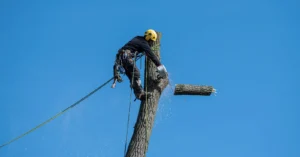
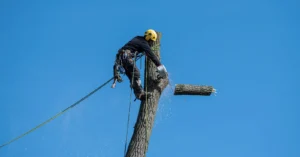
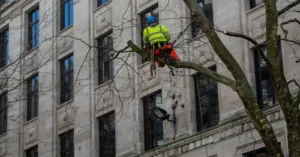
When we get a call about a dangerous tree or branch, the first job is making the site safe, that might mean roping off an area, removing the hung-up section, or taking the weight off a split limb so it can’t drop suddenly. Full removal or a proper structural assessment sometimes happens on a separate visit once the immediate danger is dealt with, particularly if the tree needs a closer look to decide whether it can be saved with a crown reduction or whether it’s come to the end of its safe life and needs to come down. We cover Stillorgan, Dun Laoghaire, Dundrum, Rathmines, Terenure, Drumcondra, Glasnevin, Swords and the rest of Dublin, and our tree services page has more on how we approach jobs like this, from emergency work right through to planned pruning and removal.
What affects the cost of emergency work
We won’t put a figure on it here because every storm job is different, but these are the things that move the price up or down:
- Access: a tree you can reach with a van and ladder costs less to deal with than one over a roof, a conservatory, or down a narrow side passage.
- Time of call: genuine after-hours or night call-outs for a dangerous situation cost more than a next-day visit.
- Size and species: a large mature tree takes longer to make safe and remove than a hedge or a small ornamental tree.
- Whether the whole tree needs to come down or just the damaged section needs removing.
- Whether a crane or specialist rigging is needed because of overhead wires, a tight garden, or a neighbouring property.
Get in touch through our contact page with photos and a description of what’s happened, and we can give you a proper, honest quote for your specific job rather than a guess.
Insurance, planning rules and protected trees
Most home insurance policies cover storm damage to your property caused by a falling tree, but cover for removing the tree itself, especially if it’s not yours, varies by policy, so it’s worth checking the small print or ringing your insurer before work starts if it’s not a genuine emergency. If the tree is subject to a Tree Preservation Order or sits within a conservation area, different rules can apply even for storm-damaged trees, and you should confirm the current position with your local authority’s planning department before any non-emergency work goes ahead. Emergency safety work to remove immediate danger is generally treated differently, but don’t assume, check first if there’s any doubt.
With over 28 years working on trees across Dublin, we’ve dealt with enough storm damage to know that the right call isn’t always the dramatic one. Sometimes it’s getting someone out within the hour, sometimes it’s simply booking a proper look in the next few days. If you’re not sure which one you’re dealing with, send us a photo through our contact page and we’ll tell you straight.
Frequently Asked Questions
Is a leaning tree after a storm always an emergency?
Not always, but a new lean that wasn’t there before, especially with lifted soil or cracking around the base, should be treated as urgent. Older, established leans that haven’t changed are usually lower risk, but if you’re unsure, it’s worth getting it looked at rather than guessing.
Can I remove a fallen branch myself before you arrive?
Only if it’s small, fully on the ground, and not under tension or caught in the canopy above. Anything larger, anything resting against a structure, or anything that’s hung up rather than fully down should be left for a professional. It’s not worth the risk of a serious injury to save a bit of time.
Does home insurance cover emergency tree removal in Dublin?
Most policies cover damage caused to your home or car by a falling tree, but cover for removing the tree debris itself can vary quite a bit between insurers. Check your policy or ring your insurer before assuming it’s covered, particularly for non-urgent clean-up work.
What if the dangerous tree isn’t on my property?
If it’s a neighbour’s tree, it’s their responsibility to deal with it, though you can certainly flag the danger to them. If it’s a street tree or on public land, report it to Dublin City Council or your local authority rather than arranging private work on it.
How quickly can Dublin Tree Surgeon respond to a storm emergency?
Response times depend on the scale of the storm and how many calls are coming in at once, which is normal across the trade during a bad weather event. Get in touch through our contact page with details and photos and we’ll prioritise based on how dangerous the situation actually is.
Should I wait until spring to deal with storm damage that isn’t urgent?
You can, but it’s often better to get a non-urgent split or damaged limb looked at sooner rather than later, since damaged wood can decay or attract disease over winter. A proper pruning visit can tidy up storm damage and improve the tree’s shape and health at the same time.